How to Use This Book
- Status
- stable
- Owner
- Panaversity
- Approved
- Panaversity ·
This book is written for four kinds of reader, and no reader needs all of it. Find your route in this chapter, read what it asks, and skip the rest until you need it. The book is long, but your route is not. The shortest route takes 4 to 7 hours of reading.
Note
After this chapter, you will know:
- which route through the book fits you
- how long your route takes and what it costs
- what you will have at the end of your route
- how to learn with Zia Tutor AI and the companion material
Start here today. Choose your route below. Then read Part I, and pick one area of your own work. Apply every exercise to that area. If you do not have one yet, use Brightline's AP Worker, the book's running example. It is an accounts payable (AP) worker for a small U.S. business.
Four reader routes
Choose the route that matches your work today. You can change routes later. PCxx exams are Panaversity's certifications, and CCxx exams are Anthropic's. PCAO-F is the Associate exam, PCAR-F the Architect Foundations exam, PCDV-F the Developer exam and PCAR-P the Architect Professional exam.
| Route | What you read | Credential | Outcome: what you will have at the end | Reading time |
|---|---|---|---|---|
| Everyday professional or manager | Front matter, Parts I and II, Chapter 34 | PCAO-F, then optionally CCAO-F | One real task from your work, delegated to an AI Worker and checked, and a written review contract for it | 5 to 8 hours, including the Associate companion |
| Builder or engineer | Front matter, Parts I to V | PCAO-F and PCAR-F, then PCDV-F | A published AI Worker plugin, connected to approved knowledge and business data, with tests that measure how well it works | 12 to 20 hours, including the Associate and Architect Foundations companions |
| Domain expert or founder | Front matter, Parts I, II and VI, the Required and Co-build chapters in Parts III to V, and the summaries of Manager chapters | PCAO-F | A written decision on which area of professional work to build for, and a first working piece of it, built with a builder | 9 to 15 hours, including the Associate companion |
| Enterprise or national leader | Front matter, Parts I, V, VII and VIII | None required | A diagnostic of how AI-native your company is, or a plan for your country (the country workbook is a later release) | 4 to 7 hours |
Reading time assumes 120 to 200 words a minute, because study reading is slower than everyday reading. Exercises and builds take extra time.
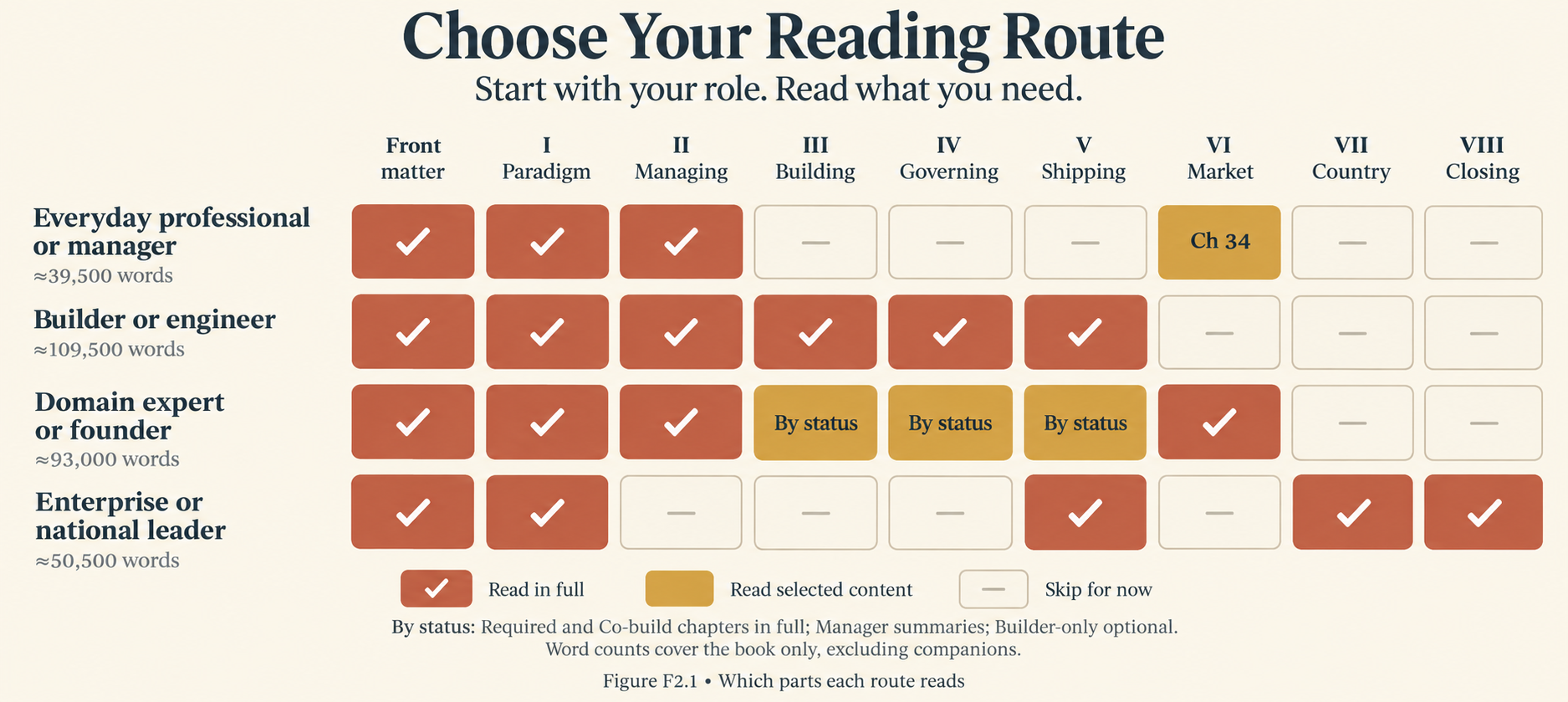
Figure F2.1. Which parts each route reads.
The builder route is the longest. It takes 12 to 20 hours of reading, plus the time to build. The Developer companion, a later release, adds 2 to 3.5 hours more. That is a real commitment, so plan for it.
On every route except the leader route, your first credential is a Panaversity PCxx exam. The Anthropic certifications come later, and the roadmaps show how readers reach them, with each exam and portfolio milestone in order.
A few notes on choosing:
- Not sure which route? Start with the everyday professional route. Its reading, Parts I and II, is part of every other route except the leader route, so none of it is lost if you switch.
- An accountant, lawyer or other specialist? Take the everyday professional route if you want AI Workers to help with your own work. Take the domain-expert route if you want to build one for others in your field, together with a builder.
- A founder with a technical partner? Take the domain-expert route and read it beside your partner's builder route. Chapter 36 explains how the founding pair divides the work.
- Leading a company or a ministry? You do not need to build. You do need Part I, because the vocabulary of every later conversation starts there.
What you need. Only the builder route asks you to write code. On the other routes, you work with everyday AI products.
You can start the exercises and labs on the free plans of Claude1 and ChatGPT.2 Both plans were checked on 2 October 2026, and plans change often. Some later exercises need a paid subscription, and builders pay separately for API usage on both Anthropic's3 and OpenAI's4 platforms. Each field guide names what its exercise requires and what it currently costs.
Three journeys, one path
The book connects three journeys. Every reader develops capability. Certification and economic goals depend on the route you choose. An exam guide teaches certification. A skills book teaches capability. A career book talks about income. This book keeps all three on one path, so you can follow as many as your route needs. The economic journey starts with better work in your current role, and it can grow into a service, a business or national capacity.
| Journey | The question it answers | Where it ends |
|---|---|---|
| Capability | What can I actually do? | Depending on your route, you can manage, build, govern, compose or ship AI Workers |
| Certification | What has an independent exam verified? | PCxx credentials, then the corresponding Anthropic certifications |
| Economic | How does capability become income, and then national capacity? | Better work in your role, which can grow into Forward Deployed Engineer or founder work, an AI-Native Company or an AI-Native Country |
A certificate without capability does not survive a client's first real task. A credential helps a client in another country trust your capability, alongside your portfolio and your results. Neither one makes money until it becomes a service, a product or a role. That is why the book teaches them together.
The "You are here" panel
Every part opens with a short panel that shows your position on all three journeys. It fits on one screen. Here is the panel that opens Part I:
Note
You are here: Part I. The AI Worker Paradigm
| Journey | Where you are |
|---|---|
| Capability | You can use an AI assistant. This part teaches you to see an AI Worker as a role you manage, and to describe one. |
| Certification | No credential yet. This part builds foundations for PCAO-F, the Panaversity exam you take after Part II. |
| Economic | You can describe one role in your field that an AI Worker could own. That is the first step on every economic route. |
- Portfolio artifact: a one-page Role Contract draft, for a role in your own field or for Brightline's AP Worker. It counts toward milestone B, which Part III completes.
- Who reads it: every route reads all four chapters in full.
- Before you start: the pages before Part I, especially How to Use This Book.
- What comes next: Part II teaches you to manage an AI Worker, which means you brief it, review its work, and set its authority.
Every panel has the same rows, so you learn to read it once. Read the panel before each part. If you are lost later, go back to it.
If you are a domain expert
If you are an accountant, lawyer, doctor or engineer on the domain-expert route, you still read the technical parts. You read each one at the depth its chapter asks of you. An AI Worker in your field is only as good as the judgment you put into it. So every chapter in Parts III to V carries one of four statuses for you.
| Status | What it asks of you |
|---|---|
| Required | Understand the concept fully. |
| Manager | Know what it does and what questions to ask about it. You do not implement it. |
| Builder-only | Optional for you. |
| Co-build | Supply the official rules, examples, edge cases and approval criteria while a builder implements. |
Manager chapters open with a summary for you. It is about 500 words long. It covers what the concept does and the questions to ask a builder about it. Read the summary instead of the full chapter.
Co-build chapters are where your expertise enters the system. The running project in this book is an accounts payable (AP) worker for a small U.S. business. At each co-build step, you will see what the AP expert supplies beside what the builder implements. For example, the AP expert supplies approval thresholds, exception cases and sign-off criteria. Your version of that step uses your own field.
Two vendors, one set of principles
The book teaches Anthropic and OpenAI only. In the authors' judgment, they are the leaders in models and harnesses, the software that lets a model use tools and carry out work in steps. That is an editorial position, reviewed every year, and not a permanent fact. Teaching the two leaders keeps the book current. Each principle is stated without vendor names and must stay true on both, so the principles stay vendor-neutral.
Other model vendors, open-weights models and third-party harnesses are not taught or compared. Other companies appear only as systems a worker connects to, such as a messaging app or a client's accounting system. There is one exception, for an exam. CCDV-F expects awareness of third-party agent frameworks,5 so Chapter 19 carries a short exam note.
Every technical topic follows the same six steps:
- Principle: the concept, with no vendor names.
- Anthropic: how Claude's products do it, in a dated box.
- OpenAI: how OpenAI's products do it, in a dated box.
- Comparison: only the differences that change an architecture decision. There is no winner, and the book does not pretend the two are equal where they are not.
- Invariant: what stays true if either runtime is replaced.
- Lab: a portable specification, built on one vendor, with a porting exercise to the other where it teaches something.
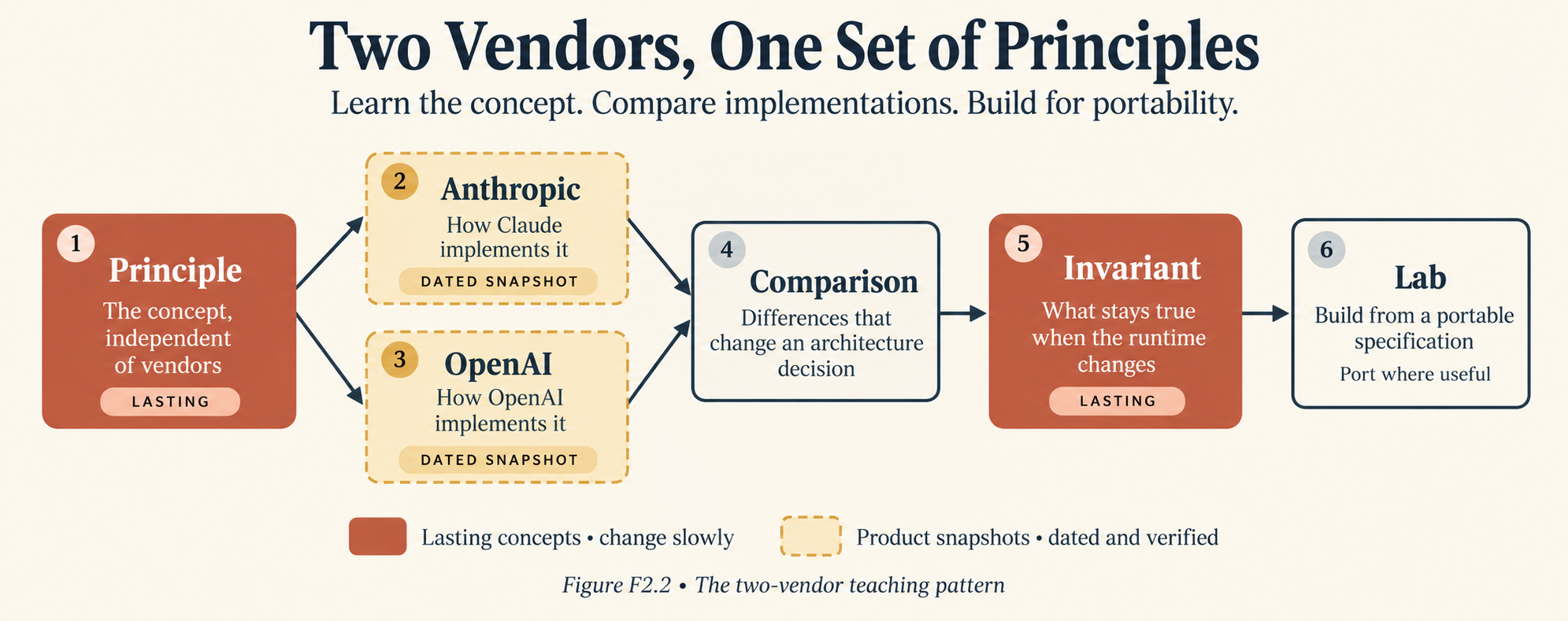
Figure F2.2. The two-vendor teaching pattern.
Read the principle and the invariant as the lasting part of each topic. Read the dated boxes as a snapshot. Products change every month. Principles change far more slowly.
The layers you own are designed so that they never depend on either vendor. These layers are KSoR, DSoR, the Role Contract, the Authority Envelope, 10-80-10, review contracts and evaluations. The platforms are rented. The knowledge and the controls are yours.
Companions and field guides
The book teaches principles, with exercises and labs to practice them. Exam depth, product detail and extra practice live outside it. That split keeps the book short enough to finish, while detailed exam preparation and implementation guidance stay available. One rule protects you: a companion may deepen a principle, but the book never depends on a companion to state one.
| Material | What it holds | When to use it |
|---|---|---|
| Four exam companions | Objective-level depth for each certification, with both vendors side by side and worked examples on the running project | When you prepare for an exam |
| Exam rehearsal banks | PCxx practice questions and rehearsals for the Anthropic exams | When you check that you are ready |
| Field guides | About 30 dated guides to current practice, each about 1,500 words and covering both vendors | When you need the exact steps in today's product |
| Screencasts | Videos of five minutes or less, showing current practice on both vendors | When you want to see it done |
| Starter repository | The running project's build steps as tagged commits, with tests that check each step | When you build |
| Country transformation workbook | Worked templates for a national or institutional plan | On the leader route |
The four companions are Associate, Architect Foundations, Developer and Architect Professional. The first two arrive with the book. The Developer and Architect Professional companions and the country workbook follow in a later release.
Every field guide and product-dependent companion page shows the date it was last verified. Check that date. If it is old, the product may have changed since. Field guides are reviewed every month, and screencasts are re-recorded when their field guide changes.
Learning with Zia Tutor AI
Reading a concept is not the same as owning it. Zia Tutor AI closes that gap. It teaches one numbered concept at a time and checks that you have it before you move on. It is served from the same approved source as this book, so it teaches the same version of each concept. If the tutor and the book ever disagree, the book is the authority.
To use the tutor, add the Zia Tutor AI connector to your AI assistant. The book's website gives the current setup steps.
A session with the tutor follows a fixed rhythm:
- What happens: a situation first, then the term that names it.
- Why it works that way: the reason behind the behavior.
- What it rules out: the wrong picture, named as wrong.
- Say it back: you explain the concept in one line, in your own words.
- Check: about four multiple-choice questions. The concept closes when you answer them with at most one miss.
Every teaching reply ends on a question you could get wrong. That is deliberate. A question you cannot get wrong teaches nothing.
If you cannot use the tutor, follow the same rhythm on your own. Read the numbered concept, explain it in one line in your own words, then answer its practice questions and build its artifact.
Work through each concept with the tutor after you read its chapter, and return to it for review before an exam.
The tutor checks understanding. It does not replace the build steps. Capability comes from producing the artifact.
Flashcards
The four routes, the three journeys, the four statuses, the six steps of every technical topic, and how to learn with the tutor.
Sources
- Plans and Pricing, Claude.↑
- Pricing, ChatGPT.↑
- Why do I have to pay separately to use the Claude API and Console?, Claude Help Center, updated 16 March 2026.↑
- Managing billing for ChatGPT and the API platform, OpenAI Help Center.↑
- Claude Certified Developer: Foundations Exam Guide, version 1.0, Anthropic, effective July 2026.↑
Preface: The Text Box That Became a Worker
How work moved from the chatbot to the AI Worker, and why certification, governance and earning now sit on one path.
Certification and Portfolio Roadmaps
The PCxx exam path and the internship gate, the Anthropic certifications that correspond to each exam, and the portfolio each reader route produces.