3.5 Three scales: a task, a worker, a company
- Status
- stable
- Owner
- Panaversity
- Approved
- Panaversity ·
In everyday life. A household runs the same pattern three ways. The first is one chore (asked, done, checked). The second is one babysitter (agreed rules, months of evenings, a regular check-in). The third is the household's house rules (set, followed, revisited each year).
The same rhythm repeats at three sizes. Only the time span changes, from minutes to years.
| Scale | First 10 percent | Middle 80 percent | Final 10 percent |
|---|---|---|---|
| A task | The brief (intent, scope, authority) and the review contract | One run of the work | Evidence review, correction, approval of this output |
| A worker's lifecycle | The Role Contract: owner, authority, escalation, the evaluation cases it must pass before real work | Months of recurring work, inside its authority, stopping when its rules say so | Monthly review: KPIs checked, evaluations rerun, the contract updated, and the worker kept, changed or retired |
| Company governance | Policy: which work AI Workers may do, who owns each one, which actions always need a person, which knowledge is official | The AI Workforce works across functions | Audit: evidence trails read, incidents reviewed, workers expanded, restricted or retired |
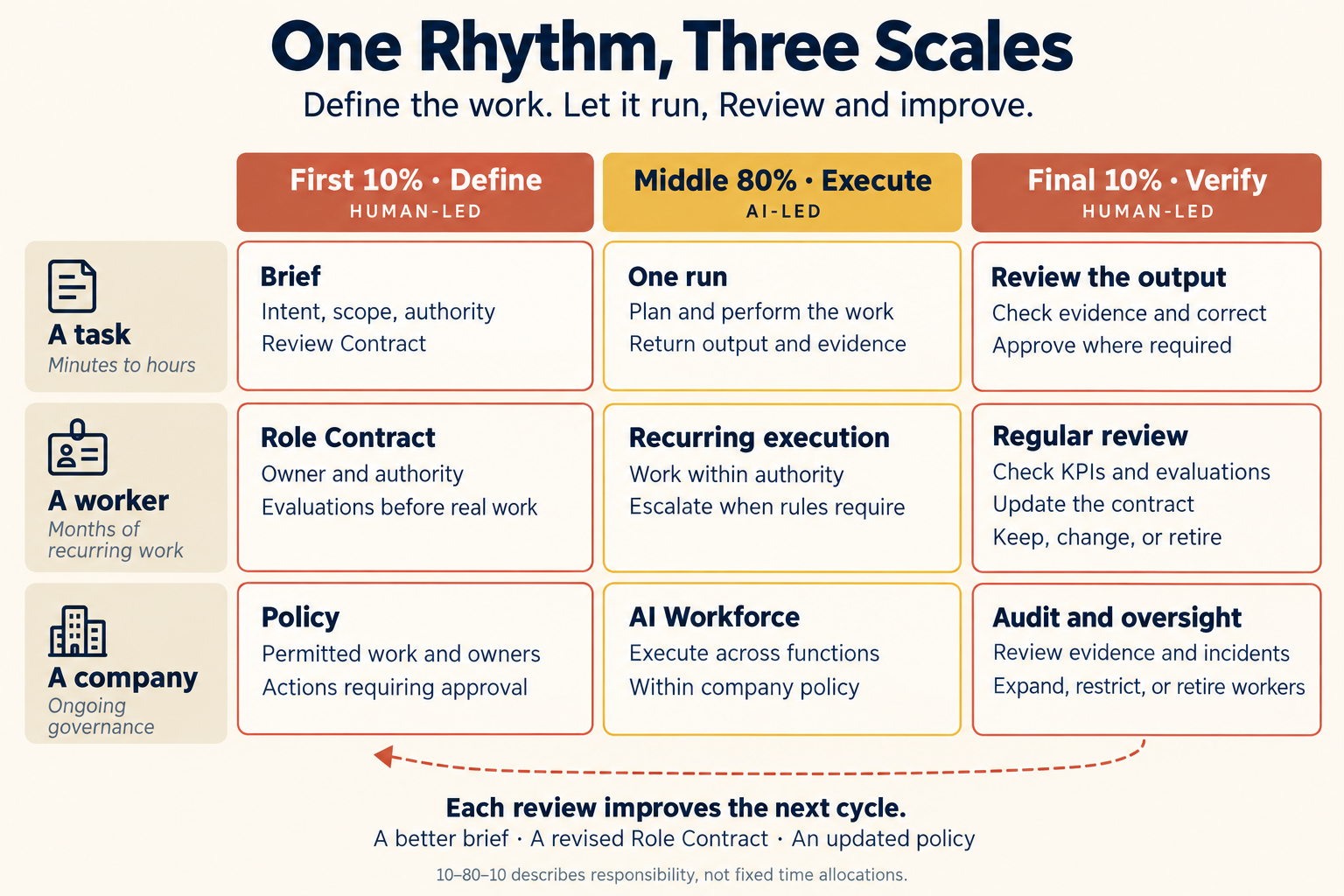
Figure 3.2. The rhythm at three scales. Each final 10 percent feeds the next first 10 percent.
A worker's lifecycle. Chapter 2's Role Contract is the first 10 percent of the AP Worker's working life. It names Dave as owner and lists the cases the worker must pass before it touches real work. The middle 80 percent is every Monday register and vendor question after that. The final 10 percent is Dave's monthly review. Are duplicate payments still at zero? Do the evaluation cases still pass? Does the contract still describe the job? A worker whose contract has not been reviewed in a year is running on an old first 10 percent.
Company governance. At this scale the first 10 percent is policy, and it is set by leadership, not by each user. It decides which work may go to AI Workers at all, and which actions, such as releasing a payment, always need a person. The final 10 percent is audit. It only works if every worker left evidence behind. That is why the rhythm needs governed layers under it. Chapter 4 introduces them. KSoR, the Knowledge System of Record, governs what an AI Worker may know. DSoR, the Data System of Record, governs what it may do and keeps the evidence.
The first edition's Thesis states this as Invariant 1, one of its rules that always hold: the human is the principal. Every legitimate chain of action starts with a person who sets intent and owns the outcome.1 The 10-80-10 rhythm is how that invariant looks in daily work.
Check yourself
Question 1 / 8 · current
0 answered
What is the first 10 percent of a worker's lifecycle?
Sources
3.4 The final 10 percent: evidence review, correction, approval
How the final 10 percent reviews the evidence, fixes each problem where it came from, and ends with a person's approval.
3.6 The three failures
The three ways the rhythm breaks, and three questions that show where to look first when a delegation goes wrong.