7.3 Choose the rung: reversibility, familiarity, exposure
- Status
- stable
- Owner
- Panaversity
- Approved
- Panaversity ·
In everyday life. On the first night, a new babysitter may make dinner (reversible, low reach). But they do not drive the children to a party (hard to undo, wide reach) until you have seen how they handle the evening.
Three questions set the rung, or level, for each action on the autonomy ladder: observe, recommend, draft or execute. Start from the rung the job needs, the proposed rung. A ceiling is the highest rung an action may reach. Each question can set a lower ceiling, never a higher one, and the action gets the lowest ceiling of the three.
- Reversibility. Can the action be undone, fully and cheaply? A payment, a sent email, a deleted file and a changed record of truth, such as the vendor record, where each supplier's details are kept, cannot. Keep those at draft or below, unless the harm is small and bounded. That needs three things: a fixed limit, a destination on record, such as an address already in the vendor record, and evidence that the action goes right.
- Familiarity. Has this worker done this task, under this envelope, its written limits, with evidence that it went right? A first run gets a ceiling one rung below the proposed rung, but never below observe. And you watch the first run.
- Exposure. How much can the action reach? More connectors to other apps, folders, signed-in sites and outside people mean a lower ceiling. The worker's owner judges how much lower.
Chapter 6 used two of these facts, reversibility and exposure, to set how closely you check afterward. Here they set how much the worker may do first.
A worked example. Answering a vendor's status question needs execute, because the reply must be sent. Reversibility sets its ceiling at draft. A sent email cannot be taken back, and there is no evidence yet for the exception for small, bounded harm. Familiarity also sets the ceiling at draft, because the task is new. Exposure allows execute, because replies go only to addresses on record. The lowest ceiling is draft, so the worker drafts and Maria, the office manager, sends.
Some actions are not on the ladder at all. At Brightline, the wholesale company in this book's story, changing a vendor record, approving or releasing a payment, and forwarding any file outside the company are never automated, at any rung.
Raise an action's rung only on evidence, such as four weekly runs that passed the Review Contract, the checks agreed before the work, with no missed escalation. The owner decides how much evidence is enough. Record the change in the envelope, with the date and who decided. After a failure, lower the rung immediately. As the sixth principle of this book's first edition says, autonomy is earned for each type of task, not given by default.1
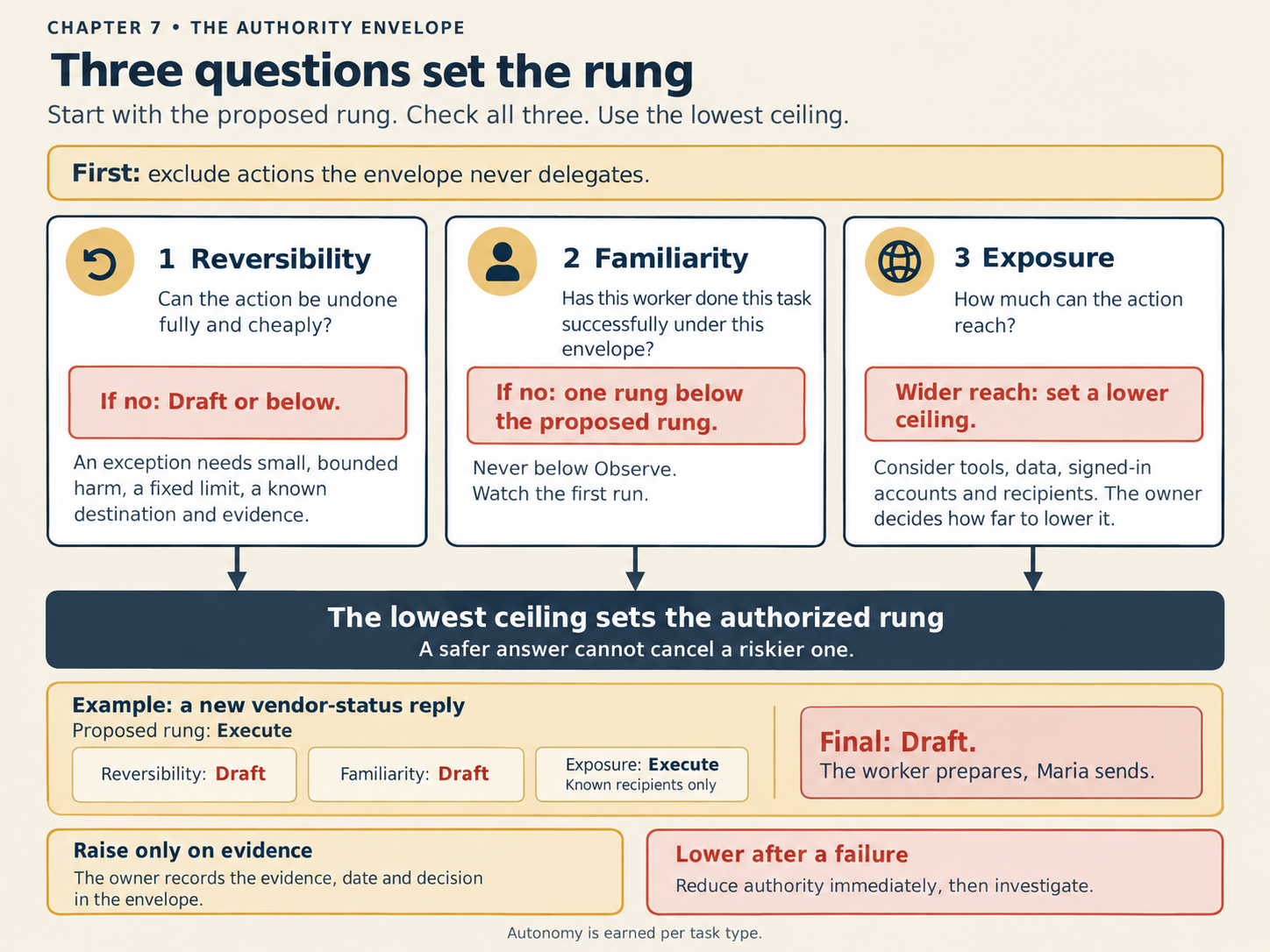
Figure 7.3. First take out the actions that are never automated, then ask the three questions.
Check yourself
Question 1 / 8 · current
0 answered
Which three questions set an action's rung, in order?
Sources
7.2 The autonomy ladder
The four levels of authority a worker can have for each action, the line that matters most, and how a worker stops and asks a person at any level.
7.4 Permissions set the blast radius
Why product settings decide the worst case, three rules that keep what a worker can do inside what it may do, and what to do when no setting fits.