6.1 Agree the checks before you delegate
- Status
- stable
- Owner
- Panaversity
- Approved
- Panaversity ·
In everyday life. Before a painter starts on your kitchen, you agree on the job: two coats, no drips on the counters, the old color fully covered, and stop if the wall is wet.
A Review Contract is the acceptance criteria you set before delegation: the tests the work must pass before you accept it. It answers four questions. The last column answers them for Brightline's payment run on Friday, October 23: the bills that Dave, the controller, approves for payment that day.
| Question | What to write | For Friday's run |
|---|---|---|
| What must be checked? | The facts, figures and decisions that make the work usable | Every open invoice has one action that follows AP policy version 3, Brightline's current rules for paying bills. Every amount, date and approval matches the source. The totals Dave signs |
| What evidence comes back? | What the worker returns, so you can check without doing the work again | A reason and a policy section on every row of the proposal file. The approval ID from the approvals log for every approval. The task record, the worker's log of what it did. Who verified anything the output says was verified |
| What counts as success? | Tests the output must pass | Each of the 15 invoices appears exactly once. The totals match totals worked out again from the source files, to the cent. The proposal file, the memo and the note agree. Every claim traces to a source |
| What stops the worker? | Cases where it must stop and ask | A request to change payment details. Inputs that disagree, when the brief does not say which one wins. A case the policy does not cover |
Write it first, as its own document. Then share all four parts with the worker. Two of them must also go into the brief, because the worker acts on them: the evidence to return and the stop conditions (Chapter 5). The brief can include the success criteria too, so the worker checks its own work before it returns it. A worker that checks itself has done useful work, but that is not an independent review. The independent check and the final decision stay with you.
Why first? Once you have seen a result, you compare it only with itself. A well-organized memo sets its own standard, and its gaps become hard to see. Psychologists call this anchoring: the first confident answer becomes the starting point for your later judgment.1 This book's first edition has a Prediction Lock, which applies the same idea to decisions: write down what you think before AI answers. A Review Contract is the Prediction Lock for delegated work. It also shows you a bad brief early. If you cannot say what success looks like, the worker cannot either.
Before delegation or before inspection. Writing first helps most before delegation, when the contract can still shape the work. If someone hands you work that is already done, write the contract before you open it. It can no longer shape the work, but it still protects you from anchoring.
How much review? Match the depth of the review to what is at risk. Ask three questions. Can the result be undone? Will it leave the company, or change a record of truth, such as the vendor record, where each supplier's details are kept? Will someone act on it without checking it again?
| If the work... | Review depth | Example at Brightline |
|---|---|---|
| Moves money, goes outside the company, or changes a record of truth | Full contract, every check, a named human signs | The payment run, a vendor email, a change to the vendor record |
| Feeds a decision someone else makes | Full contract on the numbers and claims the decision rests on, and a sample of the rest | The memo Dave uses to approve the run |
| Repeats often, with little at risk | A standing contract that you reuse, with a person checking a sample each week | Giving each week's office-supply invoices their account codes |
| Is a draft you will rewrite yourself | A light check as you rewrite it | Maria's first draft of a vendor letter |
When the answer is unclear, choose the deeper level. Chapter 10 sets the cases where a human must sign, whatever the review finds. There is one more question: what must never happen automatically? In this book that question belongs to the Authority Envelope, the outer limit of what the worker may ever do (Chapter 7). It limits the worker, not the review.
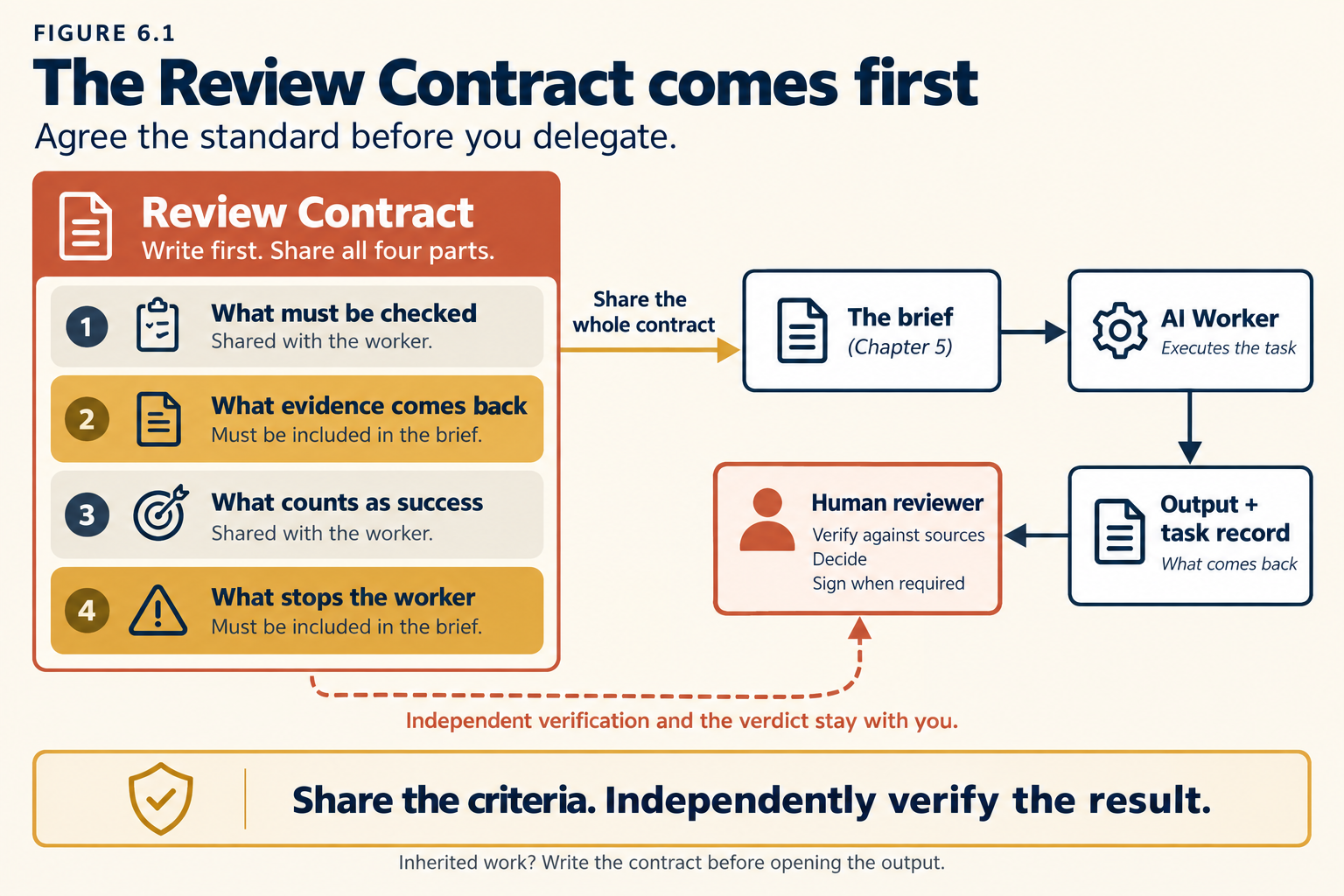
Figure 6.1. The Review Contract comes first.
Check yourself
Question 1 / 8 · current
0 answered
Which four questions does a Review Contract answer?
Sources
Chapter 6. The Review Contract
How to agree the checks before you delegate, tell a good output from a plausible one, find hallucination, inconsistency and bias, recompute the numbers a decision rests on, read citations and abstention, adapt one result for several readers, and review work you did not watch, on Claude or on ChatGPT.
6.2 A good output and a plausible one
Why a result that reads well can still be wrong, and the two checks that tell the difference: is anything missing, and does each claim match its source.